
Arrest Warrants in Appanoose County
Appanoose County arrest warrants come out of a courtroom, not a police desk. Under Iowa Code §804.1, a complaint can be filed before a magistrate, and it must be backed by an affidavit with facts tying an alleged offense to a named person. The magistrate then reviews those sworn facts for probable cause. That is the reasonable legal basis for both the charge and the person's connection to it. If the standard is met, the magistrate may issue an arrest warrant or, where the law allows, a citation instead. A second route runs through an indictment or information. Iowa Rule 2.7 lets a court, on the prosecutor's request, issue a summons or warrant for a defendant who has not already been held to answer. The judge makes that call. An authorized clerk may sign under the judge's order. The Appanoose County Sheriff does not decide probable cause.
Appanoose Arrest Warrant Probable Cause
A complaint is more than an accusation on paper. It must supply sworn facts for the magistrate to weigh. Once issued, the warrant's basic form falls under Iowa Code §804.2. The document directs a peace officer to act, identifies the defendant if known, describes the offense, states the date and issuing county or city, and carries the magistrate's official signature. Bond or release conditions may be endorsed under §804.3. A judicial officer can review the person later and set different conditions under Iowa release law. Here is the catch for a public Appanoose County arrest warrant search: supporting affidavits can stay confidential before arrest and return or initial appearance. So a missing affidavit does not prove the warrant does not exist.
What Appanoose County Arrest Warrants Contain
Iowa's model Form 6 offers the best look at the official field structure. It is a blank legal model, not proof of a live Appanoose County arrest warrant. Public docket data may show fewer items, and the county posts no public warrant roster. Iowa court case IDs run 17 characters, with capital letters used for letters.
| County and Case ID | Appanoose plus the official criminal court identifier |
|---|---|
| Named Defendant | The person identified in the warrant, if known |
| Charging Instrument | Complaint, indictment, or information and its filing date |
| Offense | Statutory name, number, or general description, not proof of guilt |
| Command | Direction to arrest and bring the person before the court |
| Issuing Authority | Judge, magistrate, or authorized clerk acting under order |
| Bond or Conditions | Optional endorsement subject to lawful judicial review |
| Date and Seal | Issuance date, signature, and official authentication |
Later docket fields can show service, officer return, initial appearance, bond changes, recall, quash, or disposition. Read the whole event sequence. A warrant authorizes custody; only the court's later rulings settle the case.
Appanoose Arrest Warrant Form Models
The Iowa Judicial Branch form library helps when a public docket uses short terms. Rule 2.36 Form 6 models an arrest warrant after an indictment or information. Form 7 is narrower. It covers a convicted defendant who fails to appear for sentencing. The forms show different legal triggers and are not private-person samples. The official Iowa court-forms interface provides category and form search controls.
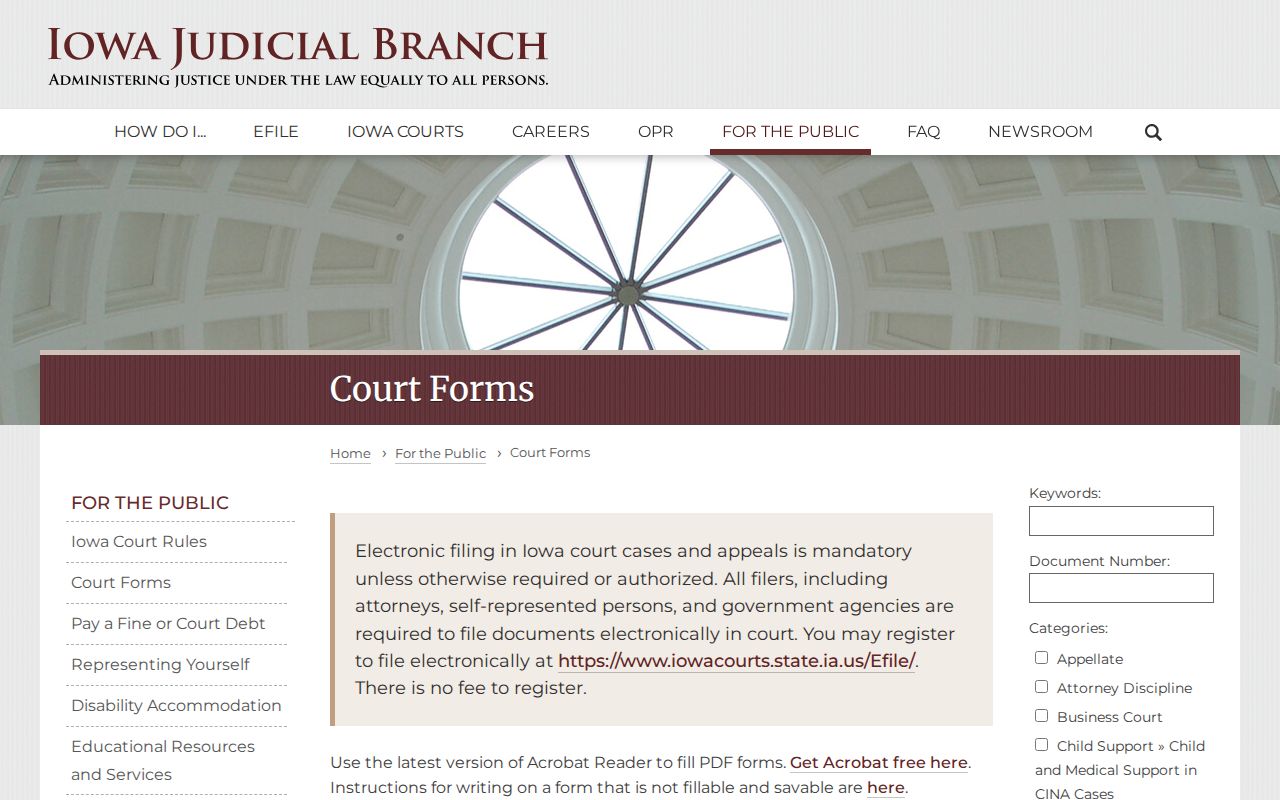
That interface is how you locate official blank forms without exposing a person's case. A form explains fields and process. It cannot show whether an Appanoose County arrest warrant is active, served, or recalled. Confirm those facts with the Appanoose County Clerk of Court and the serving agency.
Note: Form 6 and Form 7 are official models, not a live Appanoose County arrest warrant list or status tool.
How Appanoose County Arrest Warrants Are Served
Once issued, an arrest warrant goes to a peace officer for execution. Iowa Code §804.4 lets an officer execute it in any Iowa county. So an Appanoose County arrest warrant is not limited to an Appanoose deputy or to county lines. Centerville Police, another Iowa peace officer, or an authorized agency may execute process within its authority. The Appanoose County Sheriff and Centerville Police share the Law Enforcement Center at 22158 Dewey Road in Centerville. The Sheriff main line is 641-437-7100. The jail line, 641-437-7106, handles custody and booking questions. No office posts a public warrant desk, surrender window, after-hours procedure, or bond-window schedule. Call first. After arrest, §804.21 requires that the person be taken without unnecessary delay before the nearest or most accessible magistrate, subject to lawful release procedures.
The process line is: complaint or charging instrument → probable-cause review → signed warrant → delivery to a peace officer → arrest → officer return → initial appearance and bond or release decision.
Appanoose Arrest Warrant Return Trail
An officer's return closes a key part of the service loop. It is the report back to the court that the warrant was executed or otherwise handled. The Clerk maintains the docket. The jail handles detention and booking. A judicial officer controls initial appearance, bond, release conditions, and later court relief. Each office sees one slice of the process, and a public docket may expose only some steps. The Sheriff might not control a federal or out-of-state hold. The Clerk may confirm a public case but not release an affidavit still confidential under §804.29. If one phone answer conflicts with another record, write down the case ID, event date, exact status phrase, and office contacted. Ask whether the Appanoose County warrant was served, returned, recalled, quashed, superseded, or remains executable.
Arrest Warrant vs Summons vs Bench Warrant
Appanoose County courts use three different tools. An arrest warrant orders that a person be taken into custody. A summons just tells you to show up, with no arrest attached. A bench warrant usually follows a missed appearance, sentencing date, or ignored court order, so the court file itself tells you which one you face and what happens next.
| Feature | Arrest Warrant | Summons | Bench Warrant |
|---|---|---|---|
| Main command | Arrest and bring before court | Appear as directed | Arrest after missed duty |
| Basis | Complaint, indictment, or information route | Charge handled without initial custody | Missed setting or failure to comply |
| Issuer | Judge or magistrate; clerk may sign under order | Court through authorized process | Judge or magistrate in the case |
| First response | Counsel, confirmation, surrender and bond plan | Appear by the stated date | Ask about appearance, motion, recall, or bond |
Skip a summons appearance and a warrant can follow. Under Iowa Code §805.5, willfully failing to appear on a citation also calls for an arrest warrant. Paying court debt in Appanoose County is not a substitute for appearing, and it may not clear a warrant that has already issued.
Why Appanoose Warrant Affidavits Stay Closed
Warrant papers in Appanoose County stay closed for a reason. Iowa Code §804.29 keeps warrant-securing information, citations, and affidavits confidential until arrest and officer return or initial appearance, subject to statutory exceptions. Juvenile records face separate limits. Sealed material and active-investigation files can also stay out of reach. A focused request can still seek a releasable warrant, docket entry, return, or report. Give the case ID, date range, issuing court, and record type. The Iowa Judicial Branch public-records policy lays out custodian review, possible fees, redaction, and how responses arrive.
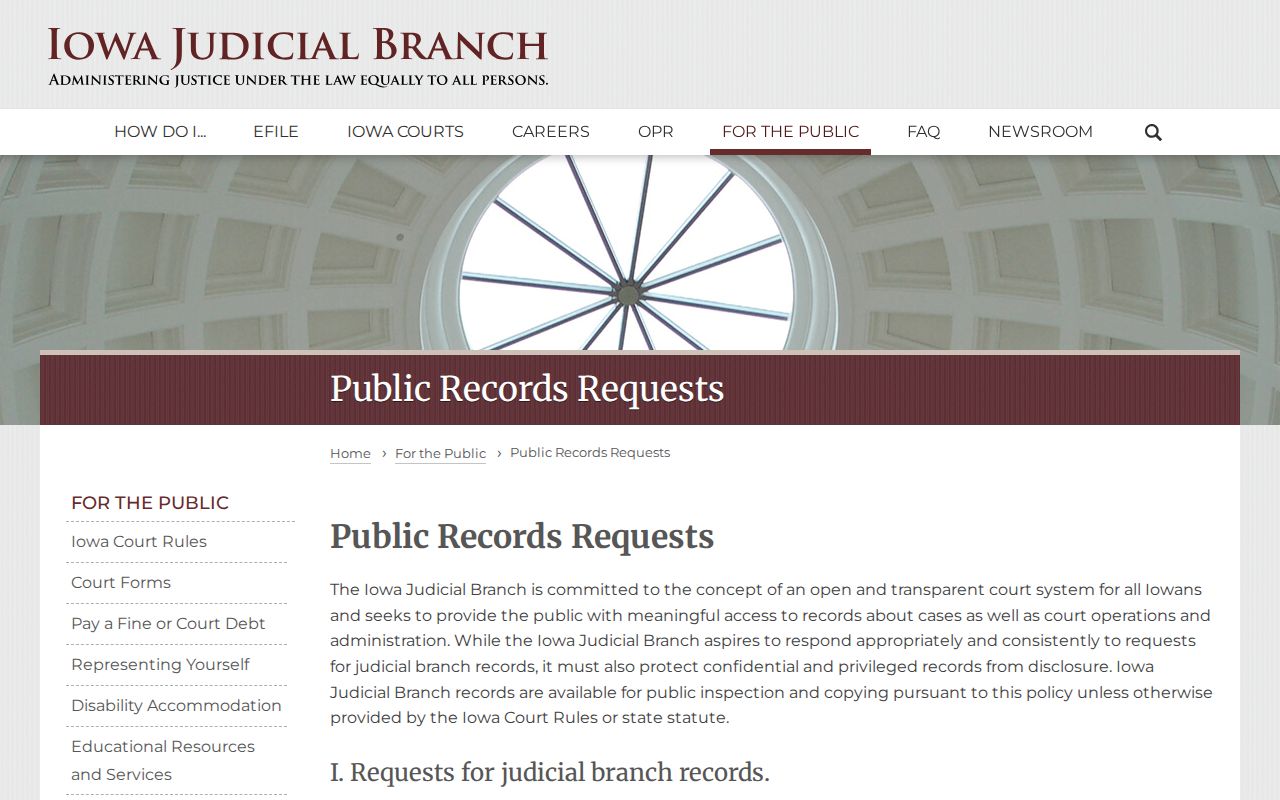
A request is a request, not a promise. The custodian may grant inspection or copies, point you to Iowa Courts Online or a courthouse terminal, answer that no record exists, or explain a denial. Ask for a fee estimate in Appanoose County before broad retrieval or redaction work starts.
Who Executes Appanoose Arrest Warrants
Any Iowa peace officer can execute a qualifying warrant, wherever it issued. Section 804.4 governs service of process, and §§804.6 and 804.7 set out warrant arrest authority. Start with Appanoose County offices as the local routing points. Still, ask which agency actually holds the warrant before you act.
| Office or Agency | Supported Role | Contact Route |
|---|---|---|
| Appanoose Clerk | Court docket, filings, public record, next setting | 641-856-6101 |
| Appanoose Sheriff | County service, custody, surrender routing | 641-437-7100 |
| Centerville Police | City peace-officer execution | 641-437-7100 |
| Appanoose Jail | Booking and present custody | 641-437-7106 |
| Other jurisdiction | Federal, interstate, or other Iowa process | Confirm the originating agency |
Fugitive work may go to the Southern Iowa U.S. Marshals Service and partner agencies. That does not turn a federal warrant into an Appanoose County court warrant. The jurisdiction that issued it controls extradition, federal appearance, and release.
After an Appanoose Arrest Warrant
An arrest is a step, not an ending. Booking follows, then the officer's return, an initial appearance, and a release decision. Iowa law requires presentation without unnecessary delay to an accessible magistrate. That magistrate reviews lawful bail or release terms and sets what comes next. Forcible felonies and other listed matters may need judicial review instead of the posted Uniform Bond Schedule. The statewide schedule sets amounts by offense class only for defined cases when court is not in session, and a judge reviewing the case is not bound by it. Appanoose County publishes no bond-window hours, payment methods, walk-through plan, or exact warrant bond amounts. The Sheriff civil-process page lists a $30 "Warrant" line. That is a civil service fee, not criminal bond and not an arrest-warrant clearance fee.
Note: Release, service, recall, and case disposition are separate events; ask the Clerk what remains after booking or bond.
What to Do If There Is a Warrant for You
Get exact facts first. Search the official Iowa Courts Online case system for a docket clue. Call the Appanoose County Clerk at 641-856-6101 and ask for the case ID, warrant type, issue date, status, bond or condition, and next setting. Then call the Appanoose County Sheriff at 641-437-7100 about service and safe-surrender routing. A chapter 22 request can seek a releasable existing record if the public docket does not answer the question. Remember that the jail handles custody and booking, not a complete warrant search. Bring in defense counsel early. Counsel can review the charging instrument, ask whether an appearance or motion is possible, and arrange a planned voluntary surrender or bond arrangement if authorized. The court might recall the warrant, meaning it withdraws it, or quash it, meaning it sets the warrant aside. Appanoose County publishes no walk-through, recall form, or surrender schedule. A walk-in does not guarantee you avoid booking. The Appanoose County warrant records home outlines the wider resolution route.
Important: Speak with a lawyer before voluntary surrender, bond, recall, or quash steps, and verify every instruction through the official Clerk or Sheriff.
Pay any permitted fine or debt only through the Clerk, official EPayment, or the published court phone route. Iowa courts and officers never demand bitcoin, prepaid cards, or urgent payment to avoid arrest. After surrender, payment, bond, appearance, or court action in Appanoose County, get the order or receipt. Ask when the docket and the serving agency's status will update. Clearing the arrest warrant does not by itself resolve the underlying charge.